


Species Guide
Moose
Alces alces
Moose are the largest member of the deer family, living in northern forests from Alaska and Canada down into the northern Rockies, the upper Great Lakes and New England.
Their sheer size changes everything, from shot choice to getting the meat out.
Know your animal
About the moose
Moose favor young, regrowing forest after logging or fire, willow flats, and country close to lakes and marshes. In winter they browse willow, birch and aspen twigs. In summer they add leaves, forbs and water plants, often wading in to feed from pond bottoms.
Senses and behavior
Moose have rather poor eyesight but sharp senses of smell and hearing. They’re usually solitary, can run 35 mph and swim well. Bulls in the rut and cows with calves can be aggressive, and during the rut bulls will often travel a long way to investigate a call.
Why anatomy matters
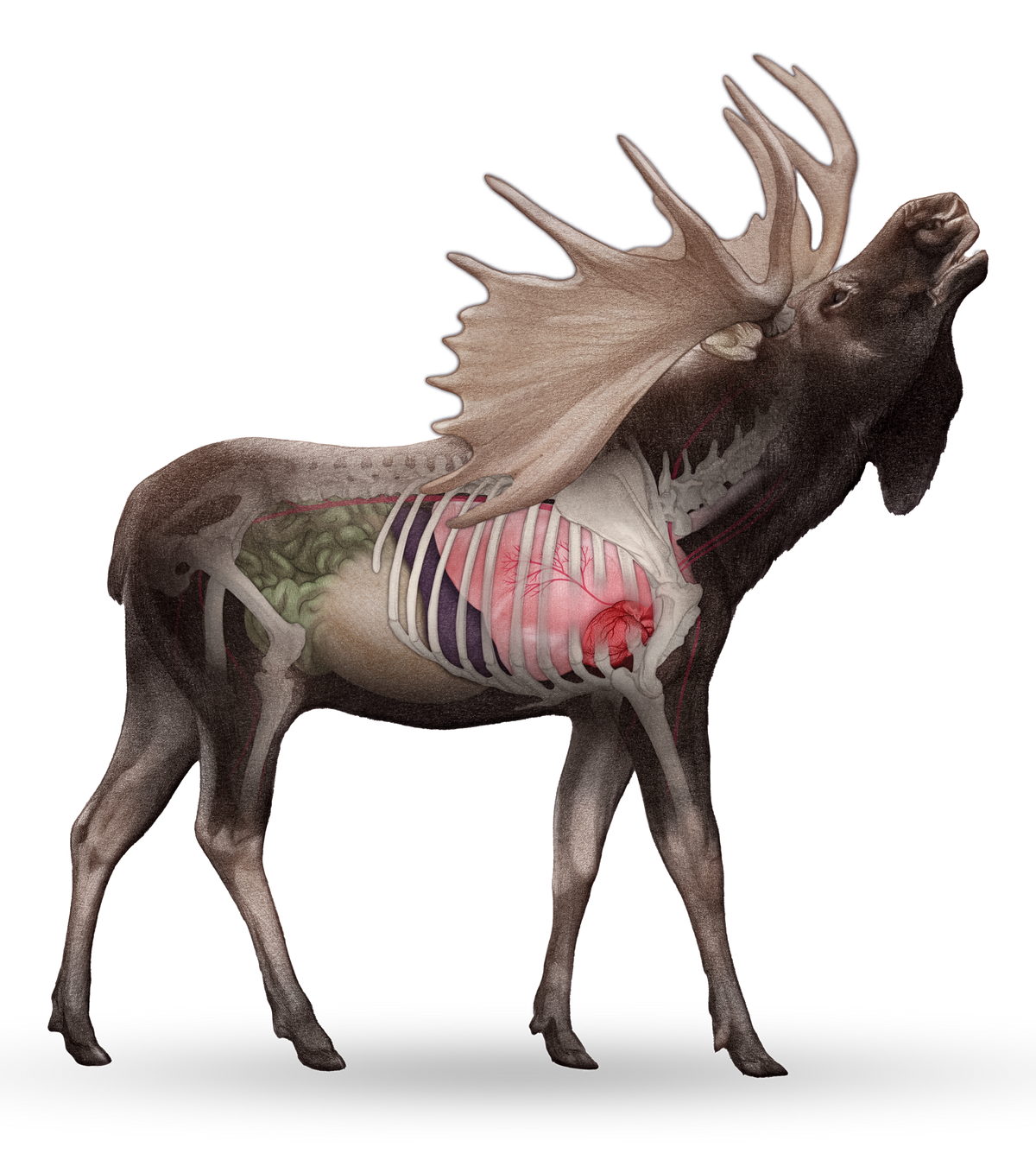
A moose is huge, but the heart and lungs sit deep in the chest, just behind the front leg and about a third of the way up the body. The shoulder and leg bones are heavy, so wait for a broadside angle and use gear that can reach the vitals. Moose often show little reaction to a good hit.
Interactive anatomy
Learn Anatomy & Practice
Pick your weapon, aim where you think the vitals are, and take the shot.

The Monthly Shot IQ Challenge: six animals, one shot each, at real yardages.
Take the Monthly Shot IQ Challenge →LungsPrimary target
Aim just behind the front leg, about one-third up the body. This puts the shot through both lungs and often the heart, the most forgiving target on a big animal.
HeartPrimary target
Low in the chest behind the front leg. Moose seldom drop at the shot even when hit well, so stay put, wait about 30 minutes, then follow up quietly.
ShoulderHeavy bone
Large, dense shoulder and leg bones guard the front of the chest. Rifle hunters need a bullet that can break them; bowhunters should stay behind them and skip quartering-toward shots.
PaunchAvoid
A moose’s stomach is enormous, so a shot a little too far back lands in the gut. A wounded moose pushed too soon may travel a great distance.
Explore more species
 turkey
 hog
 Whitetail
 Black bear
 Elk
 MooseYou are here


